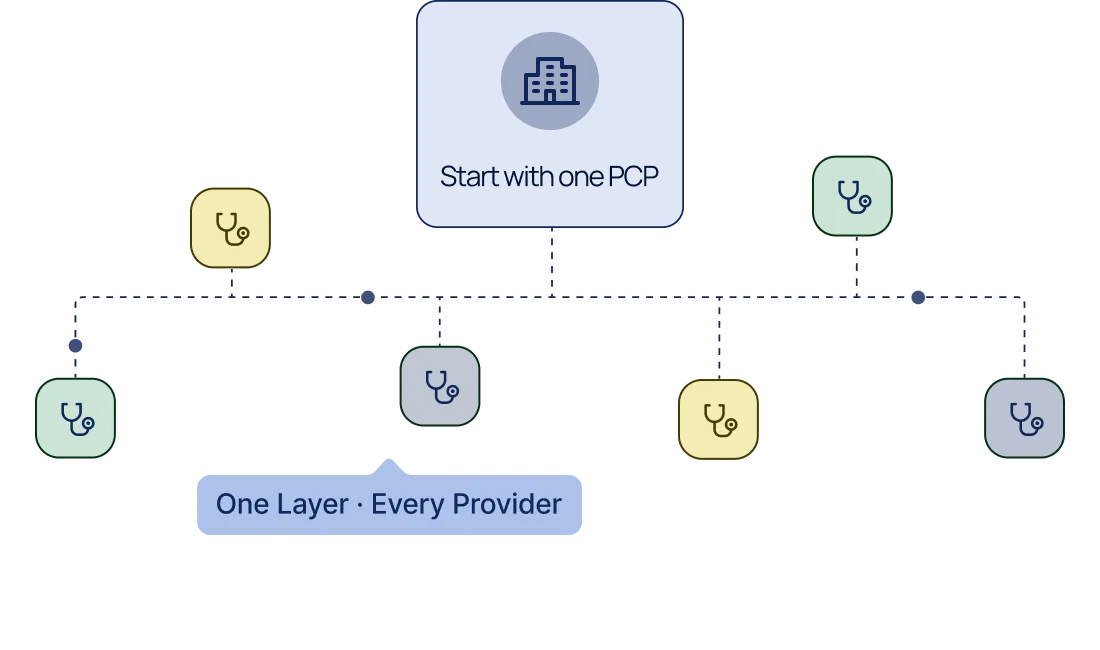

One coordination layer across every provider in your network.
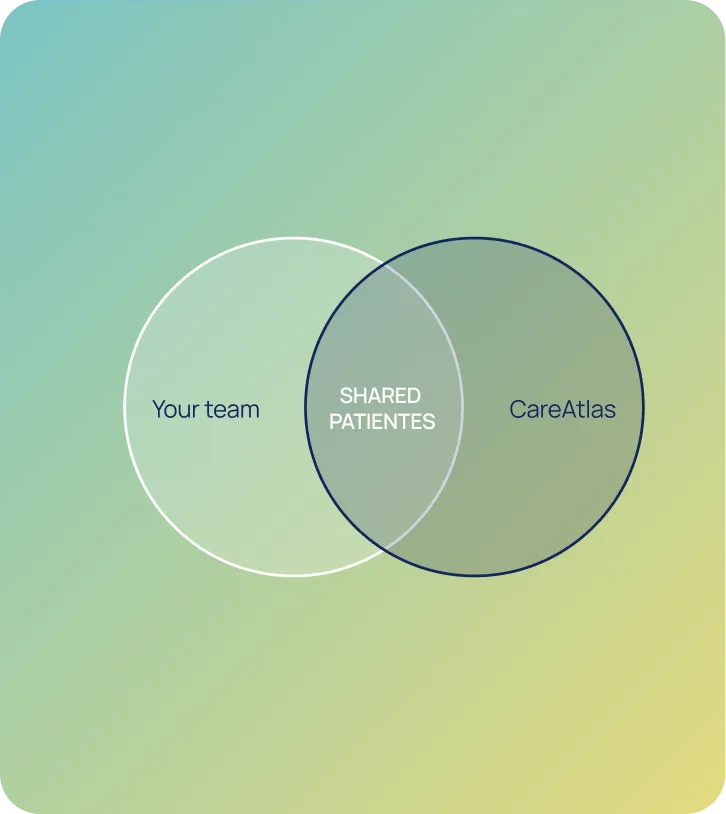
CareAtlas delivers care management across your network's contracted PCPs — reducing total cost of care, improving HEDIS and Star measures, and closing chronic-disease care gaps at scale. Platform-only (CareAtlas Connect), or platform-plus-overflow-staffing (CareAtlas Extend). Your contracted providers don't change their workflow. Your attributed lives get coordinated care.

The operating reality inside value-based organizations in 2026
Attribution complexity, inconsistent care across contracted PCPs, care-gap data that doesn't trigger action, and HEDIS / Star measures that move by fractions. CareAtlas is built for the specific version of these problems VBO leaders are solving.
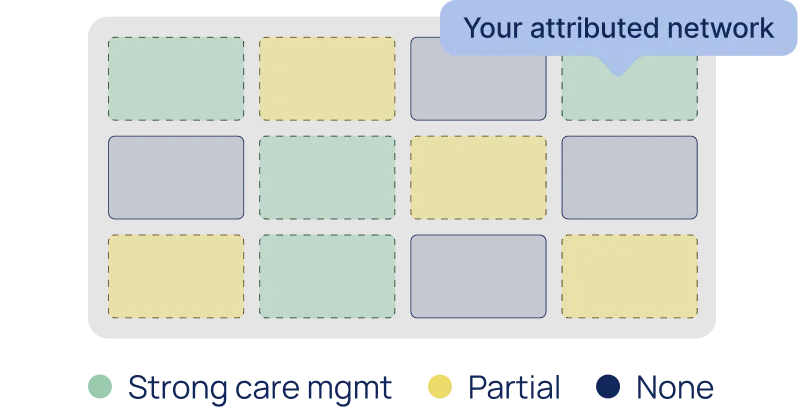
Your attributed lives see wildly different levels of care coordination.
Some contracted PCPs run strong care management. Others run none. The same patient gets a different care experience depending on which PCP they're attributed to — and that variability is where TCOC and HEDIS gains leak away.
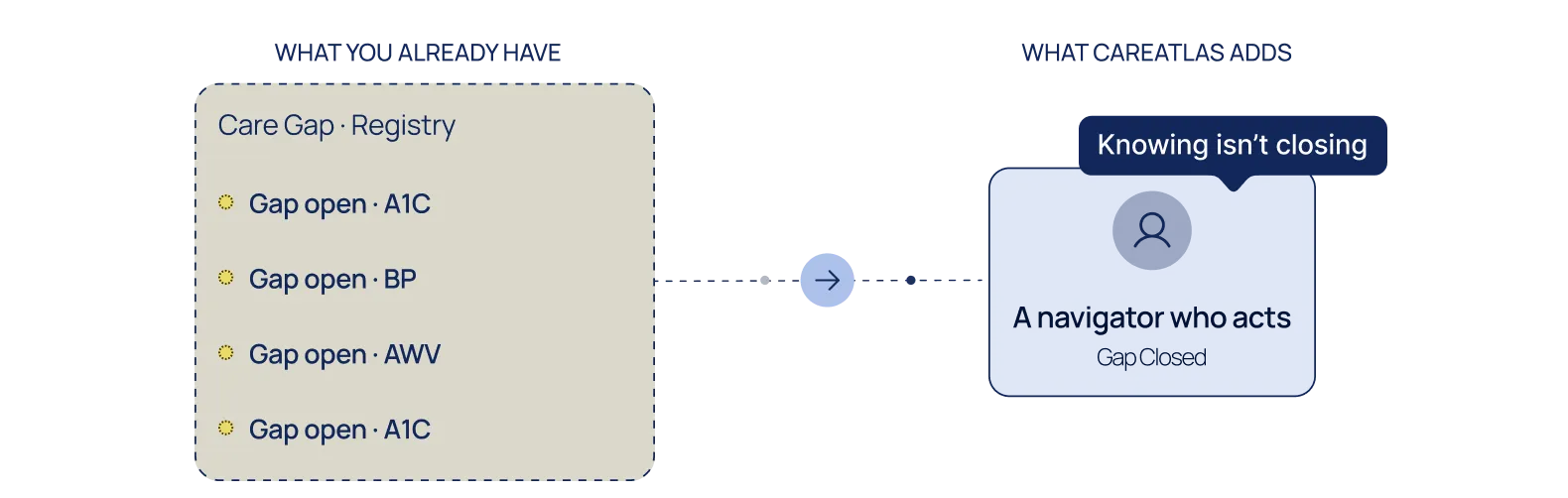
You already know which patients are non-compliant. Knowing isn't the bottleneck.
Most VBOs have population-health dashboards, risk-stratification reports, and care-gap registries. What they don't have is operational capacity to act on them — the navigators who call the patients, the platform that runs the monthly cadence, the documentation that proves the gap closed. A report doesn't close a gap. A person does.
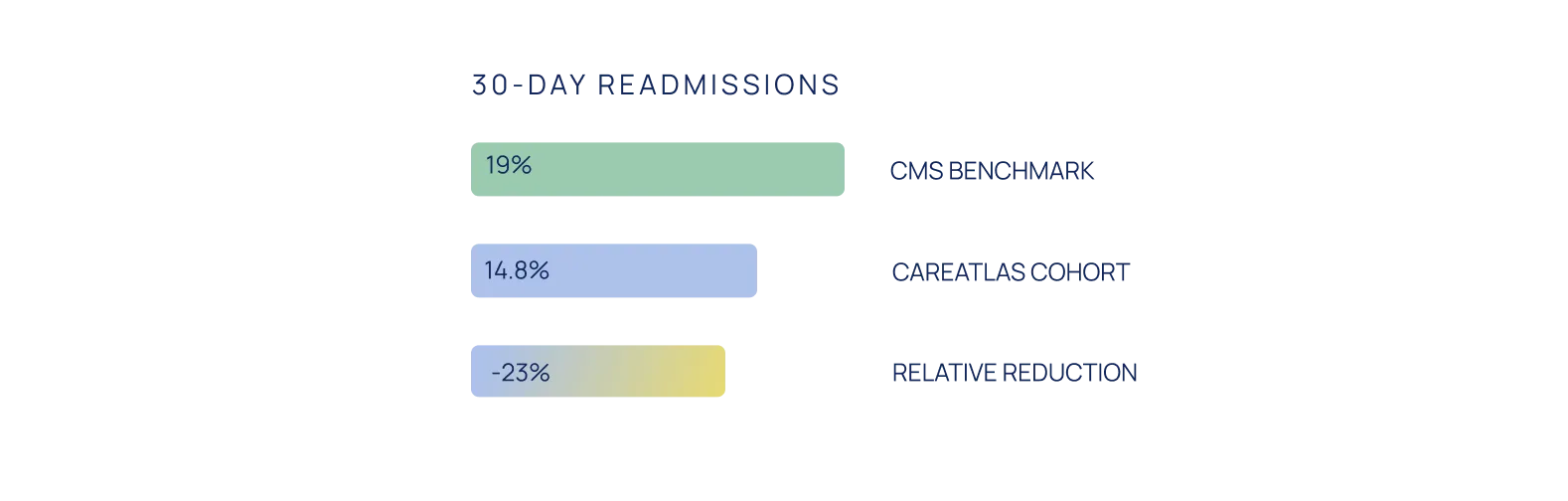
Total cost of care moves when 30-day readmissions move.
30-day readmissions are concentrated in the post-discharge window (TCM's 30 days) and among chronic-condition patients whose deterioration goes un-monitored (RPM's daily visibility, CCM's monthly cadence). CareAtlas's published cohort showed a 23% relative readmission reduction — in the exact population a risk-bearing organization is accountable for.
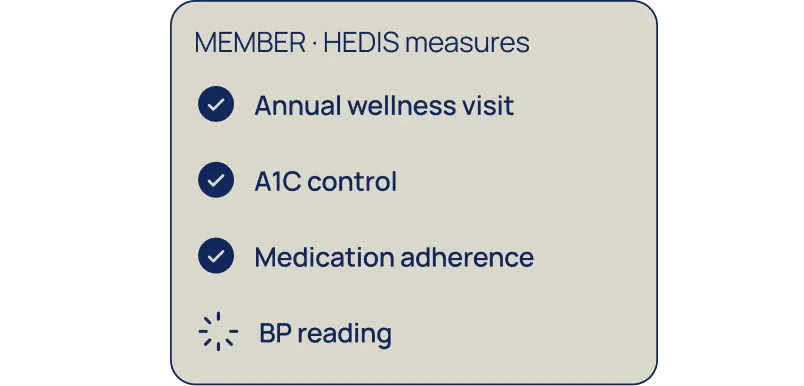
HEDIS and Star require closing the loop on every attributed member.
HEDIS and Star measures are hard not because they're complex, but because they require documented care-management activity on every attributed member, every year. CareAtlas runs that cadence as a delivered service, not a dashboard.
We have a model that fits.
Every organization is different. CareAtlas offers three models so you get exactly the level of support you need — from full-service to platform-only.
CareAtlas Complete
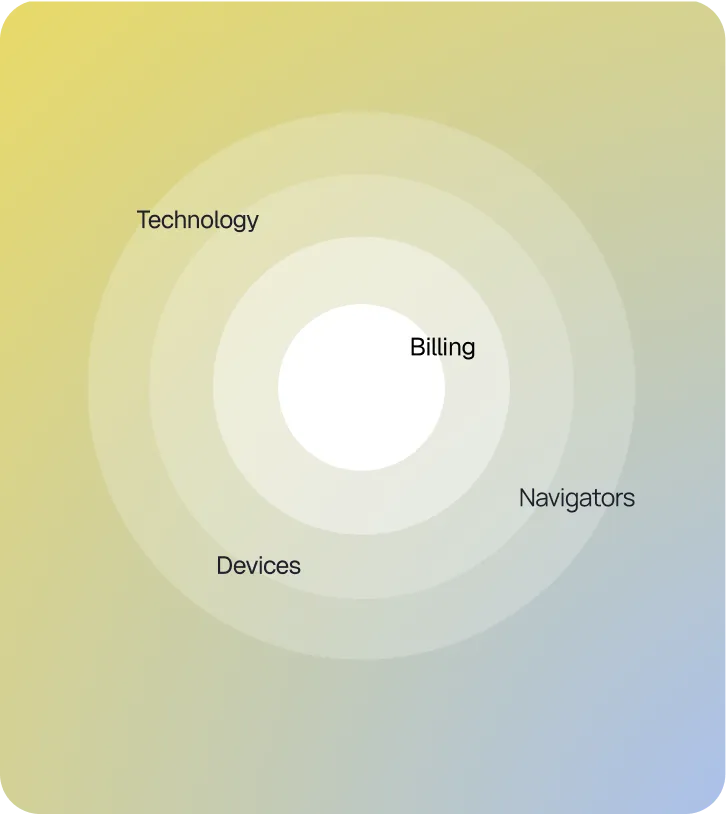
Full-service care coordination. We provide the navigators, technology, devices, enrollment, billing, and care delivery — end to end. For hospitals, CareAtlas serves as provider of record through our affiliated professional corporation — no upfront investment required. For practices and community health centers, revenue consistently exceeds program costs.
CareAtlas Extend
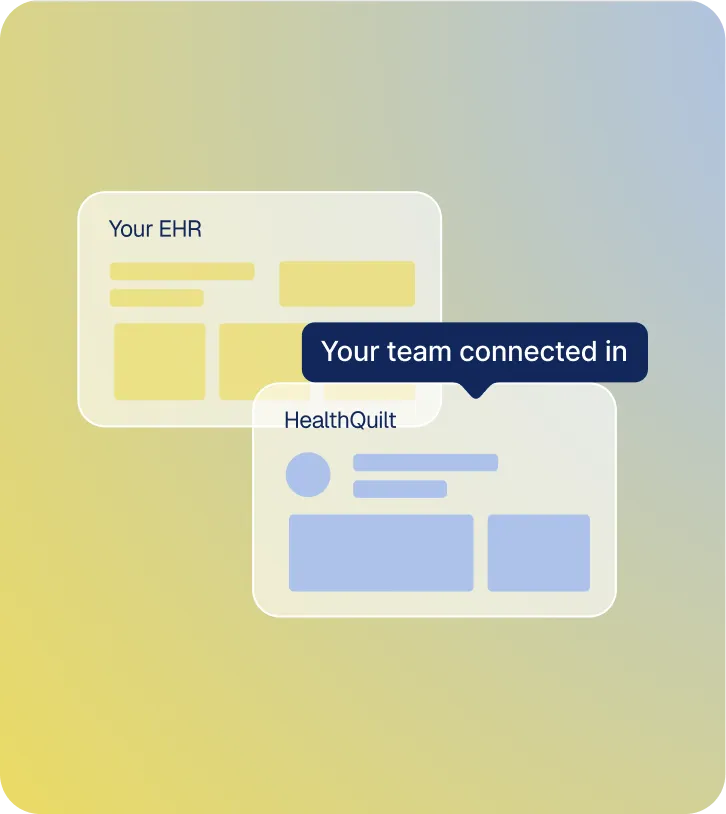
Already have some care coordination staff? We augment your team with the HealthQuilt platform, device logistics, and overflow navigator support — filling gaps without replacing what works.
CareAtlas Connect
Platform-only access to HealthQuilt — our AI-assisted care coordination software, EHR integration, analytics, and compliance tools. You bring the team. We bring the technology.
Four Medicare programs. Deployed across your contracted providers.
The four programs below run across any PCP in your network that chooses to deploy them. APCM is the baseline we build every attributed Medicare panel around; CCM, RPM, and TCM layer in where clinical need rises.
Remote Patient Monitoring
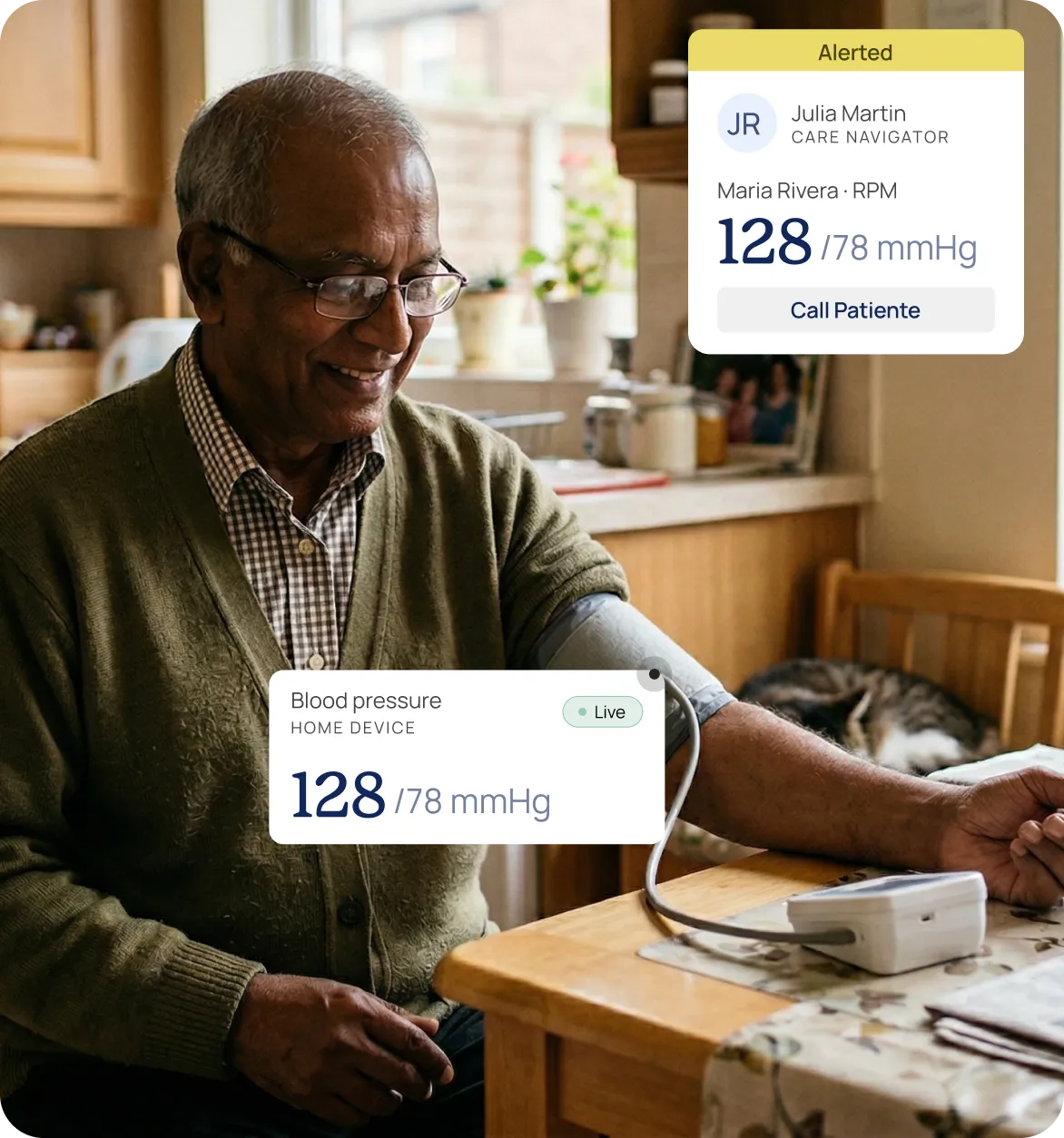
RPM: Daily visibility into patient health
Cellular-connected devices ship directly to patients — blood pressure cuffs, glucose monitors, pulse oximeters, scales. No WiFi. No smartphone. No patient app. Daily readings are monitored by dedicated care navigators with AI-assisted alerts that catch deterioration before it becomes an ER visit.
Chronic Care Management
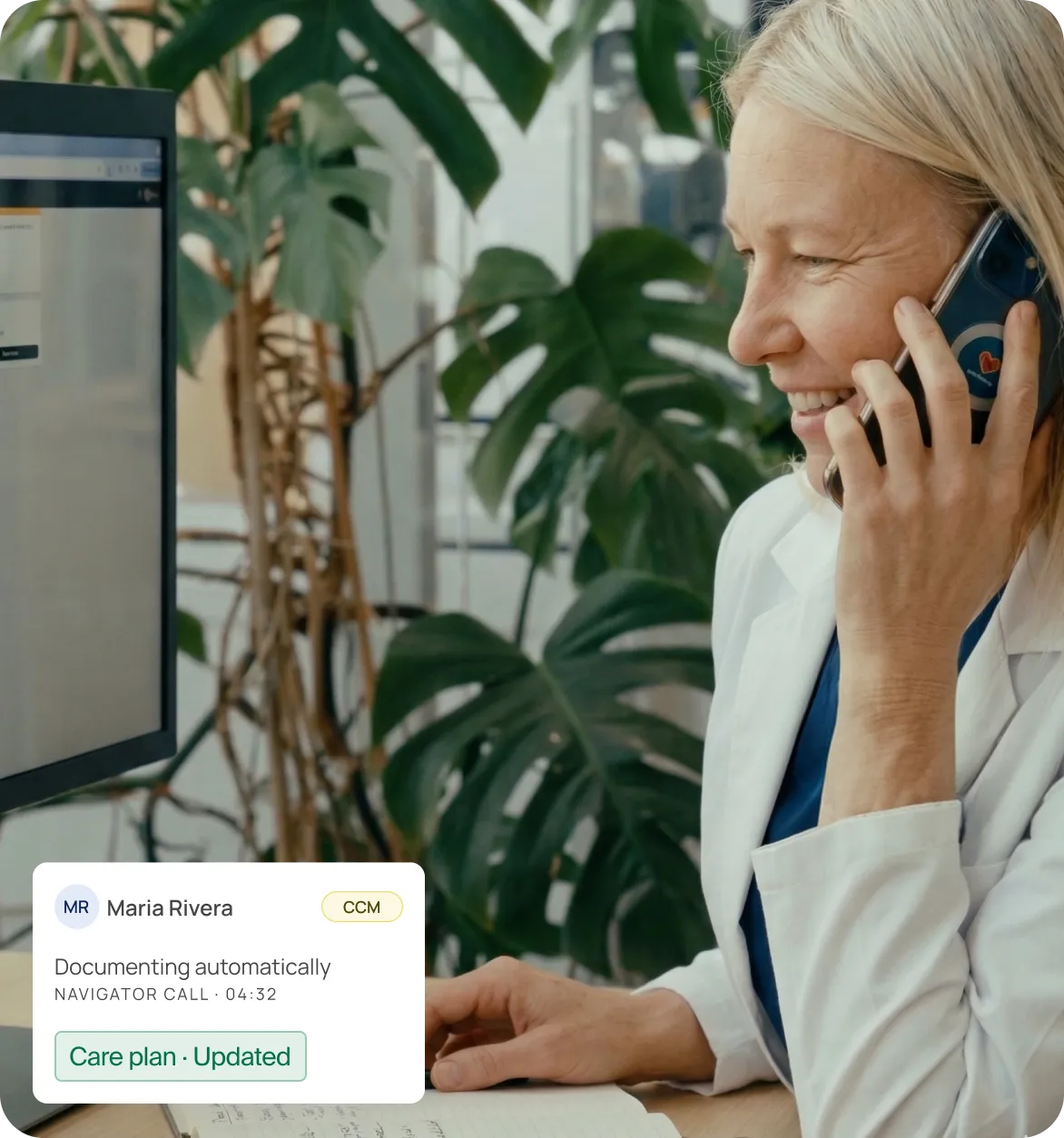
CCM: Consistent care between appointments
Monthly navigator check-ins, personalized care plans, medication management, and social determinant screening — all documented and billed under 99490/99491. Only about 18% of eligible Medicare discharges receive a TCM bill, even though roughly 52% of unbilled eligible discharges already had a qualifying visit within 14 days. CareAtlas helps close that gap.
Transitional Care Management
TCM: The critical 30 days after discharge
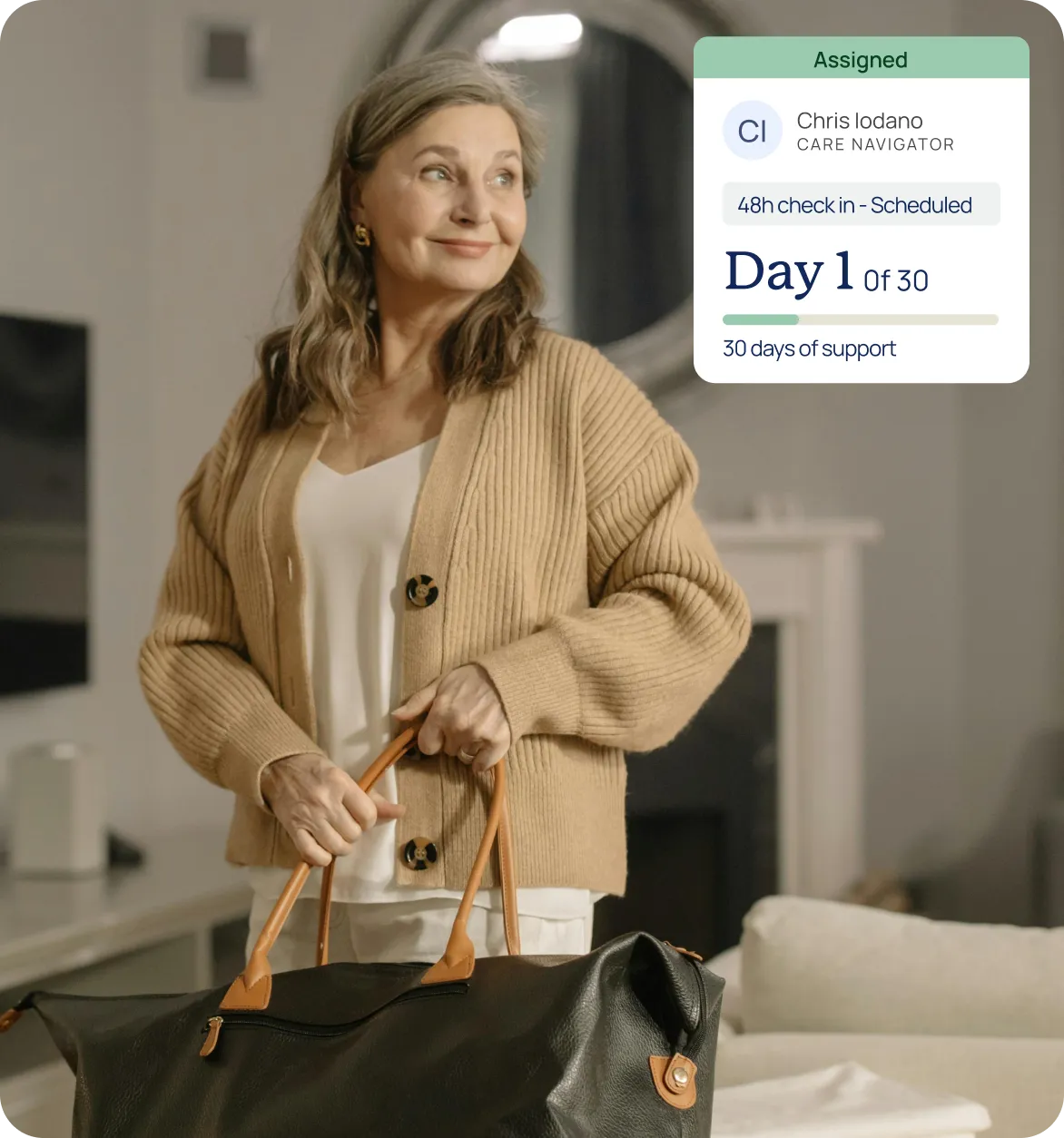
Navigator outreach within 48 hours of discharge. Medication reconciliation. Follow-up scheduling. 30 days of transition support during the window when patients are most vulnerable — and when the vast majority of billable TCM episodes go uncaptured. Only about 18% of eligible Medicare discharges are billed for TCM (HHS ASPE/NORC, 2019 claims), and among those unbilled, over half already had a qualifying office visit within 14 days — revenue left on the table.
Advanced Primary Care Management
APCM: The newest Medicare revenue pathway
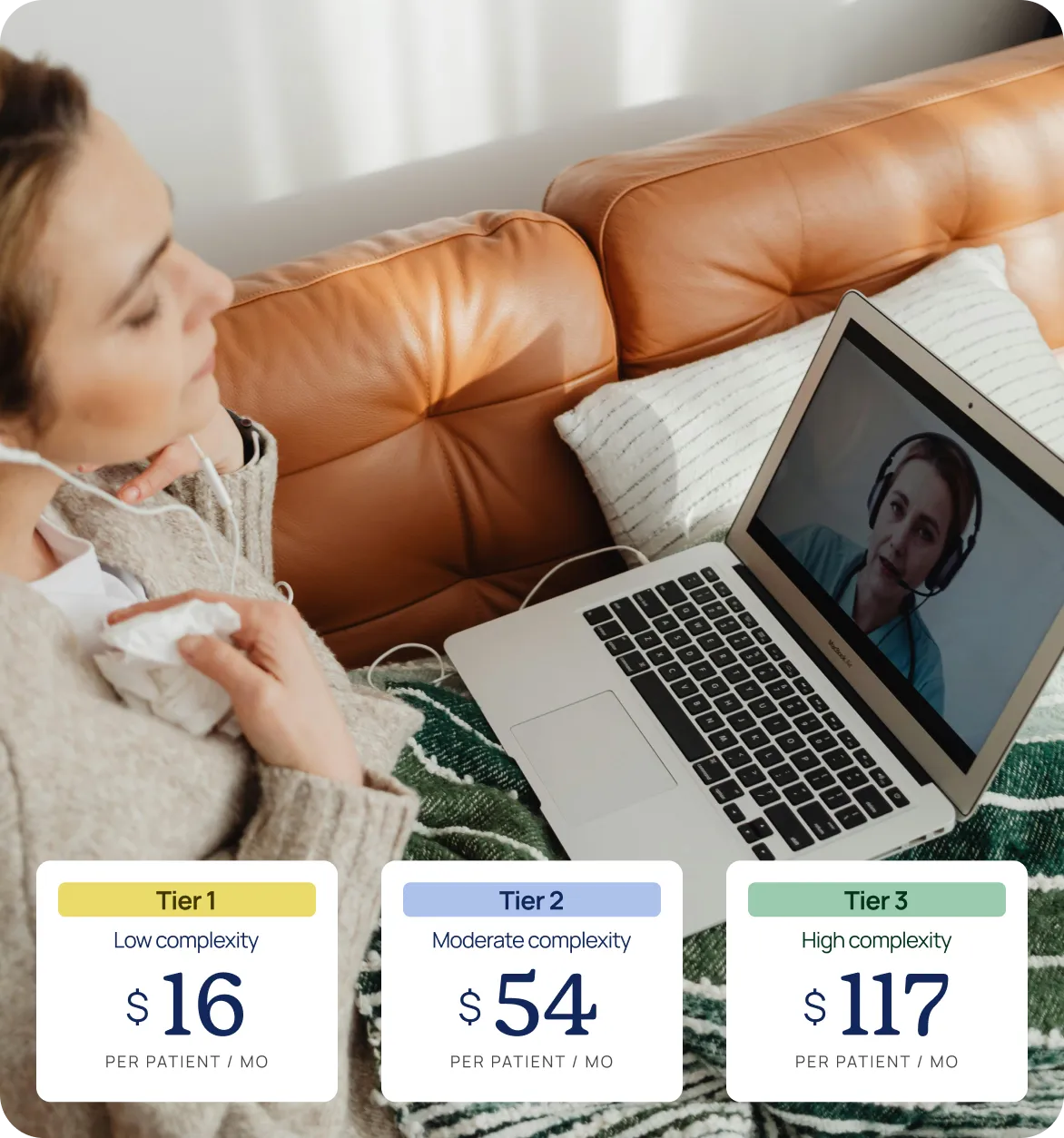
APCM reimburses across three risk-stratified tiers — $16/mo (Level 1), $54/mo (Level 2), and $117/mo (Level 3) — with no time-tracking requirements. For a panel of 200 patients at Level 2, that's ~$129K/year in recurring revenue, billable alongside RPM.