
The newest Medicare pathway. Built for the panels you already have.
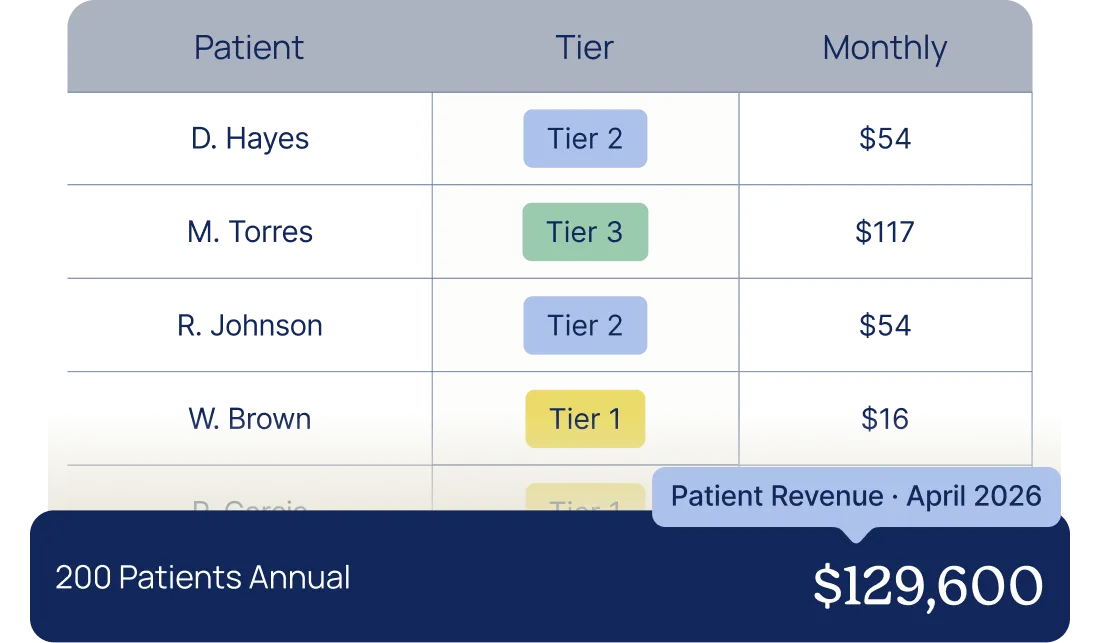
APCM reimburses comprehensive primary care management across three risk-stratified tiers — approximately $16, $54, and $117 per patient per month — with no time-tracking requirement. CareAtlas runs the program end-to-end. Your physicians stay provider of record. Your panel becomes recurring revenue.

Everything needed to run APCM — delivered.
CareAtlas handles the full operational lift of APCM. Your physicians and your staff do what they already do; we do the rest.
We find the right patients. We enroll them.
CareAtlas identifies Medicare-eligible patients on your attributed panel, risk-stratifies them across APCM's three tiers, obtains consent, and enrolls them. No list-building project on your side. Enrolled patients stay with their existing PCP of record.
.webp)
The care plan gets written. The physician signs.
HealthQuilt drafts the initial comprehensive care plan from the patient's chart and the enrollment touch. Your physician reviews, edits if needed, and signs. Subsequent quarterly refreshes follow the same pattern — drafted, reviewed, signed.
.webp)
Monthly touches. Real relationships. Escalation when it matters.
Each patient gets a dedicated care navigator who knows their name, calls them on cadence, and builds a genuine relationship over time — 4+ monthly touches on average. Clinical concerns route to a clinical navigator or back to the PCP. Administrative coordination stays off the physician's plate.
.webp)
One bill per patient per month. Clean.
APCM's three-tier PMPM structure is billed monthly with no time-tracking requirement. Every qualifying element is captured structurally as the work happens. Month-end is a report, not a reconciliation.
.webp)
Three base codes. Monthly. No time-tracking threshold.
APCM replaced the old 99490-family complexity with a cleaner structure. Medicare reimburses comprehensive primary care on a per-patient, per-month basis, risk-stratified across three tiers. CareAtlas captures the qualifying elements; your physician is provider of record; you bill monthly.
$16
- Baseline Coordination + Care Plan
- Ongoing access between visits
- Qualifying elements captured on every enrolled patient
$54
- Center of gravity for most Medicare panels
- 200-patient panel: $129,600 / year
- Billable alongside RPM when indicated
$117
- Higher coordination burden
- Housing, transport, dual-program navigation
- The population most programs under-serve
APCM + Behavioral Health Integration add-ons
The 2026 Medicare Physician Fee Schedule finalized three optional add-on codes that layer on top of an APCM base code when the same practitioner delivers Collaborative Care Model (CoCM) or general Behavioral Health Integration (BHI) services in the same month. CareAtlas supports the workflow where clinically indicated.
Billable alongside RPM
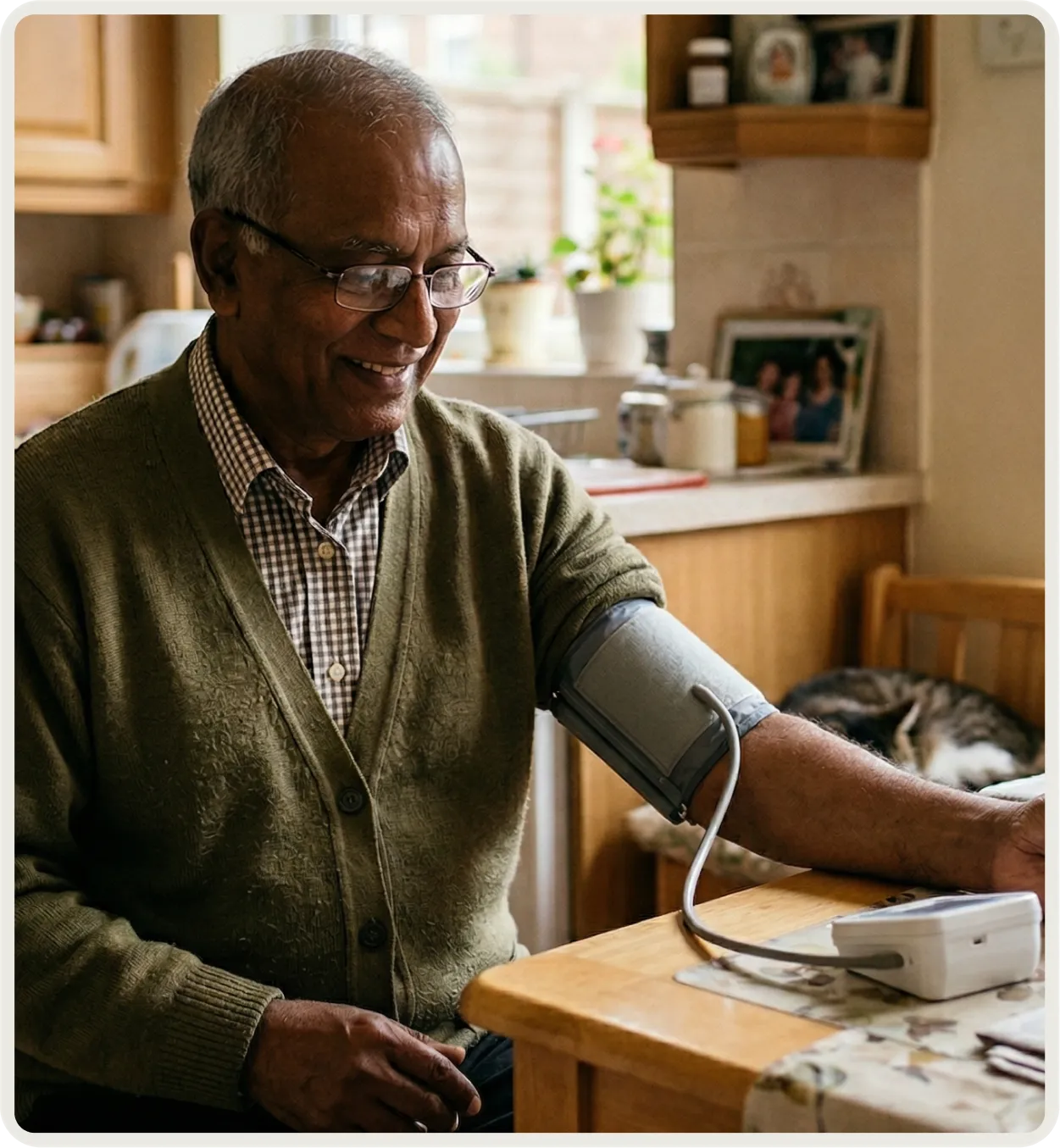
APCM and RPM are not mutually exclusive. For patients who benefit from both, CareAtlas enrolls and bills them concurrently — maximizing the care delivered and the revenue captured per eligible patient.
2026 Medicare national averages. Varies by locality and payer. Not a guarantee of revenue.
Any Medicare panel that's currently under-coordinated — which is most of them.
APCM was designed for the routine Medicare work that falls between quarterly visits: the care plan that's never quite current, the refill question that could have been a call, the patient who hasn't been touched since the last A1C. CareAtlas runs it for primary care practices, community health centers, FQHCs, health systems with attributed lives, and value-based organizations seeking a coordination layer across their contracted providers.
APCM is the baseline program for every CareAtlas patient. RPM runs alongside APCM; CCM and TCM are alternatives for patients whose needs exceed APCM, not additive.
.webp)
One platform. One partner.
Every required element, captured.
CareAtlas runs APCM as a turnkey program inside the HealthQuilt platform — so the qualifying work is done, the data flows back to your EHR, and your physicians see the coordination happening around them without doing the coordination themselves.
.webp)
Eligibility, risk-stratification, and consent.
CareAtlas identifies eligible patients on your attributed panel, risk-stratifies them to the appropriate APCM tier, handles the enrollment conversation, and captures consent structurally. Enrollment volume is driven by panel fit, not by your staff's bandwidth.
.webp)
The care plan writes itself. The clinician owns it.
HealthQuilt drafts the comprehensive care plan from the patient's chart, medication history, and the enrollment touch. Your physician reviews, edits where needed, and signs. Quarterly refresh follows the same pattern. The clinical judgment is the physician's; the writing is ours.
.webp)
A named navigator. Monthly cadence. Insight loop to the PCP.
Each patient gets a dedicated, named care navigator — 4+ monthly touches on average. Every touch is logged, summarized, and pushed back to the PCP inside their EHR. When clinical concerns exceed APCM's scope, CareAtlas escalates to a clinical navigator and, where appropriate, back to the PCP.
When clinical need rises, CareAtlas escalates.
APCM is the baseline for every CareAtlas patient. These three programs run alongside it when the clinical situation calls for them.
.webp)
.webp)